Obelisk Analog Horror Game
- 4.5
- Rating
- 500.00K
- Installs
- Free
- Price
 Analysis by App-foxy
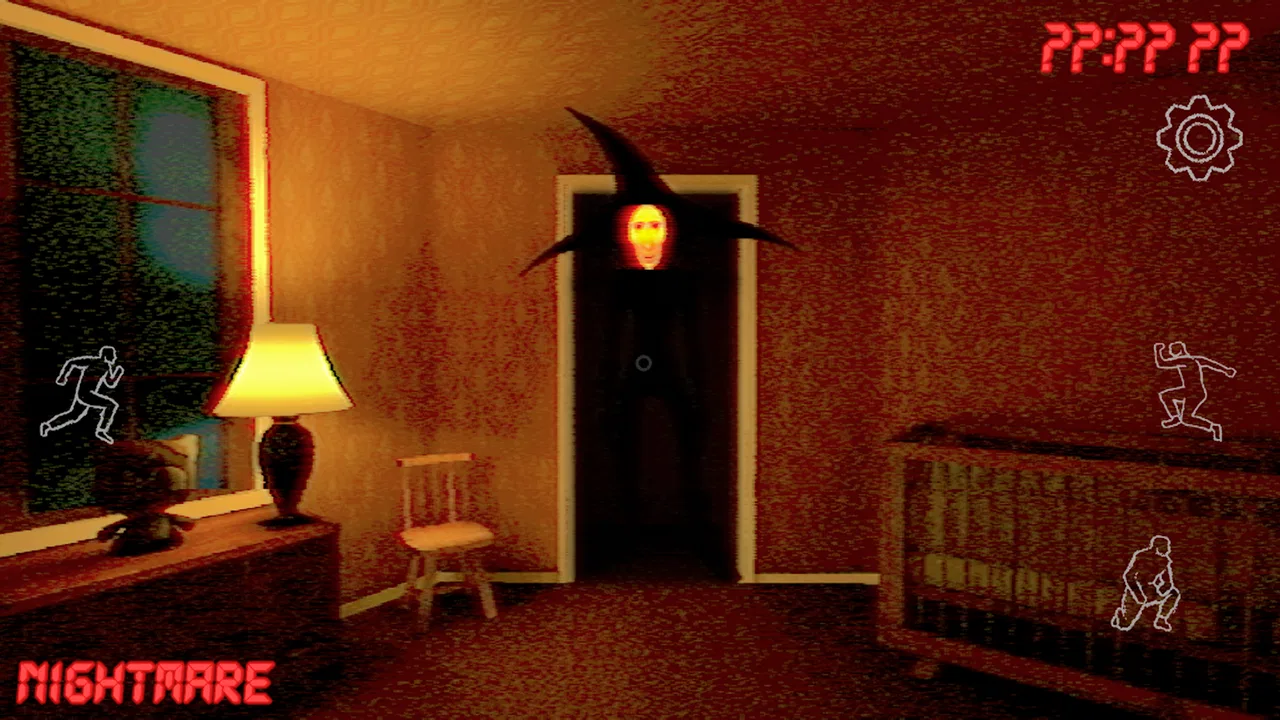
Obelisk Analog Horror Game caught my attention because it focuses on a very specific kind of fear: being trapped in a house with no window and trying to survive five nights while an ominous obelisk hangs over the experience. I usually approach short horror games with some caution, because the atmosphere can be stronger than the actual play, but this one has a clear identity. It is an adventure game from CapyCapy Studio, built around VHS-style presentation and analog-horror tension rather than fast action.
My first impression is that the central idea works best when I treat the house as a place to study, not simply a level to rush through. The limited setting makes small details more important. A sound, a change in the image, or a strange moment in a familiar room can feel more disturbing when there is nowhere obvious to escape. The real strength here is sustained unease, not constant shock.
Why the windowless house is the whole point
The house with no window is more than a memorable setting. It changes how I think about movement, safety, and time. In a conventional adventure game, I often look for an exit or a wider view of the world. Here, the absence of that outside connection makes the interior feel sealed off. The player is encouraged to pay attention to what is inside the house and to question whether the environment can be trusted.
You May Also Like

 Pandora - Music & Podcasts
Pandora’s Music Is Easy to Start, but Harder to Recover
Pandora’s strength is its low-effort path from a seed to a station. Its weak spot is how much confidence it asks you to place in connection, setup, and quiet recovery.

 8 Ball Pool
 Is Built on Rivalries, Rematches, and Routine
A close look at the rivalries, rematches, shared routines, and unanswered safety questions that turn a quick pool match into a persistent mobile community.

 Samsung Music
’s Quiet Strength Is Playing What You Already Own
Its reach comes less from spectacle than from dependable access to a personal library. That simplicity is both the app’s strongest retention engine and its ceiling.

 AccuWeather: Weather Radar
AccuWeather Review: A Quick, Clear Forecast for Everyday Decisions
For everyday plans, the best forecast is the one you can understand quickly. AccuWeather makes rain timing, radar, and local conditions easy to act on, with a few trade-offs.

 Hill Climb Racing
Why Hill Climb Racing Still Turns Crashes Into One More Run
A tiny car, a bumpy hill and one more upgrade: Hill Climb Racing keeps resurfacing because its simple chaos makes every near-miss feel personal.

 AliExpress - Shopping App
AliExpress Makes Global Shopping Feel Personal, but Shoppers Bear the Risk
AliExpress turns a global marketplace into a pocket-sized discovery engine. Its reach is useful, its shopping loop compelling, and its trade-offs easy to miss.
More From Our News Desk
View All News


That design choice gives the game a useful advantage over many ordinary horror alternatives. A larger map can provide variety, but it can also reduce tension because I always feel that I am making progress toward a new area. A closed house creates the opposite effect. Familiar spaces can become uncomfortable because returning to them does not necessarily make them feel safer.
The obelisk itself also gives the game a recognizable focus. Rather than presenting a vague supernatural threat with no visual anchor, the experience is built around a specific image and idea. That helps the horror feel more deliberate. I am not simply waiting for something random to happen; I am trying to understand the relationship between the house, the nightly survival goal, and the presence suggested by the title.
This is where the VHS analog-horror style matters. The presentation is meant to feel imperfect and unsettling, as though I am watching or interacting with something recovered from an old recording. That kind of visual language can make ordinary events feel suspicious. It also asks me to accept a certain amount of ambiguity instead of expecting the clean, polished look of a modern action game.
For me, the most interesting capability is the way the game turns a confined environment into a source of pressure. It does not need a huge world to create curiosity. The house becomes a puzzle of attention: what should I remember, what has changed, and which details deserve a second look? That is a more thoughtful form of horror than simply placing an enemy in front of me.
How the five-night structure affects play
The five-night objective gives the experience a clear rhythm. I know there is a defined survival challenge, but the wording does not make the game feel like a simple countdown. Each night becomes a reason to revisit the setting with a different level of confidence. Early on, I am likely to observe cautiously. Later, I may recognize patterns, take risks, or become overconfident because something previously felt harmless.
I find this structure especially useful for short play sessions. I can begin a night when I have a few quiet minutes, then stop without feeling that I have abandoned an enormous campaign. At the same time, the nightly framing gives the game more shape than a collection of disconnected scares. The goal is understandable from the beginning: endure the house long enough to reach the end of the sequence.
There is also a psychological trade-off. Knowing that the experience is divided into five nights can make me more analytical. I start thinking about progression and rules, which may reduce the mystery for players who prefer completely unpredictable horror. On the other hand, that structure helps people who want a clear reason to continue. It gives the fear a destination.
I would not approach this as a traditional adventure with extensive exploration, character development, or a long list of destinations. Its appeal is narrower and more atmospheric. The house, the obelisk, and the nightly challenge are the important pieces. If I want a large world with many systems, this is probably not the right choice. If I want a focused horror scenario that I can understand quickly, the compact premise is much more appealing.
What the analog presentation changes in practice
The VHS approach affects how I read the screen. In a brightly lit, high-definition horror game, visual information is usually there to help me. Here, the rougher presentation can make information feel incomplete or unreliable. That uncertainty is valuable, but it can also create friction. I may spend time deciding whether something is part of the threat, part of the visual style, or simply a detail I have misunderstood.
That ambiguity is one of the game’s strongest tools, but it needs patience from the player. I would recommend playing in a quiet room with headphones if possible, not because the game requires a special setup, but because the atmosphere depends on noticing small changes. A noisy environment or constant multitasking can flatten the tension and make the experience seem less effective than it really is.
A useful personal habit is to avoid rushing through the first encounter with a room. I try to form a mental picture of what feels normal before deciding that anything is wrong. In a game built around an enclosed location, memory becomes part of the experience. I pay attention to the arrangement and mood of the space, then compare that impression with what I see later.
Another practical tip is to play one night at a time rather than treating the game as background entertainment. The analog style can lose some of its impact if I keep checking another app or talking over the audio. This is not a game I would choose for a crowded commute. It suits a short, focused session at home, when I can let the uncomfortable pauses do their work.
The presentation may also be a barrier for players who dislike visual distortion or deliberately old-fashioned imagery. Some people find that style immersive; others find it tiring or less readable than a clean modern interface. That is not a flaw that can be separated from the game’s identity. The same effect that creates dread for one player may feel like unnecessary interference to another.
The best everyday scenario for playing
The situation I would recommend is a quiet evening when I want something more involved than watching a short horror video but do not want to commit to a large game. I can start a night, give the house my full attention, and stop after reaching a natural break. The premise is easy to explain to a friend, yet the experience benefits from discovering the details personally, so I would avoid describing every strange moment before someone plays.
It also works for a small group taking turns. One person can control the game while the others watch for changes in the environment and discuss what seems important. That can make the uncertainty entertaining, although it will naturally reduce the feeling of isolation. For the strongest personal horror effect, I prefer playing alone. For a casual shared session, the unusual setting gives people something specific to discuss instead of relying only on jump scares.
I would not recommend starting it when I am already tired enough to lose focus. The game’s tension depends on observation, and fatigue can turn deliberate uncertainty into simple confusion. Likewise, people who need frequent action may find the pacing too restrained. The best audience is comfortable with atmosphere, repetition, and the possibility that the game wants them to sit with an uncomfortable question rather than answer it immediately.
Where it stands beside other horror adventures
Compared with conventional adventure games, this one appears more concentrated. There is less emphasis on traveling through a broad setting and more emphasis on interpreting a single, enclosed situation. That makes it easier to enter and easier to finish, but it also means there is less variety for players who enjoy collecting, crafting, or building a large inventory of tools and discoveries.
Compared with a pure jump-scare game, the obelisk concept gives the horror a stronger thematic center. I am not only waiting for a sudden image; I am thinking about what the house represents and why the nightly survival challenge matters. The result should appeal more to players who enjoy analog horror and unsettling storytelling than to players who want an arcade-like test of reflexes.
It is also different from passive analog-horror videos. Here, I am responsible for moving through the experience and making sense of what happens. That small amount of agency changes the emotional effect. Watching someone else enter a disturbing house can be entertaining, but being the person who has to continue through it makes hesitation part of the play.
There is a clear trade-off in that focus. A larger horror adventure may offer more locations, more mechanical variety, and a longer sense of progression. This game’s advantage is concentration: the house does not need to compete with a dozen unrelated systems. I would choose it when I want a distinct mood and a contained challenge. I would choose a broader alternative when I want exploration to be the main reward.
Practical details before installing
The game is free, which makes it easy to try without treating the decision like a major purchase. It includes in-app purchases priced at $2.99 per item, so I would check the purchase prompts carefully and decide in advance whether I want to spend anything. The free entry point is useful for curious players, while the presence of optional paid items means the experience should be approached with normal store-account awareness.
Its age rating is Everyone 10+, a sensible fit for a horror game that uses disturbing ideas and an unsettling presentation without being positioned as an adults-only title. Parents should still consider a child’s sensitivity to frightening imagery. A rating can guide the decision, but the windowless-house premise and analog visuals may affect younger players differently.
On Android, the listed minimum operating-system requirement is Android 8.1. I would check that before installing, especially on an older phone or a device that has not been updated recently. The current version is 1.0.2, which tells me I should keep the app updated if I want the intended current build and any available fixes included with it.
CapyCapy Studio has given the game a focused identity rather than hiding it among unrelated genres. It is categorized as an adventure game, but I would describe it more precisely as a compact analog-horror adventure. That distinction matters because someone searching for a conventional exploration game may expect a different kind of progression.
The store presence is encouraging without being overwhelming: the game has a 4.3 average from around 890 ratings and has passed 50 thousand installs. I read that as evidence of real interest, not proof that every horror fan will enjoy it. The smaller review count, around 21 written reviews, also makes personal judgment important. The premise and presentation are specific enough that individual tolerance for slow, ambiguous horror will matter more than a single score.
Who will get the most from it
I think the strongest audience is made up of players who enjoy analog horror, confined spaces, and stories that leave room for interpretation. If I like examining a strange environment, remembering what looked normal, and letting a threat build gradually, this game has a good chance of working for me. The five-night format also suits players who prefer a defined challenge instead of an open-ended horror world.
It is a particularly good fit for someone who wants a game to discuss afterward. The obelisk and the sealed house create a central mystery that can be approached from different angles. I may focus on the visual clues, while a friend pays more attention to the rhythm of the nights. That kind of conversation is part of the appeal, especially when the game does not explain every feeling immediately.
I would skip it if I need precise instructions, bright visuals, or constant action. I would also look elsewhere if my favorite part of adventure games is exploring many distinct regions. The narrow setting is the reason this game can maintain its mood, but it is also the reason the experience may feel limited to players who want breadth.
Another group that may want to wait is anyone who dislikes horror built on uncertainty. Some players prefer to understand the rules quickly and improve through skill. This game’s appeal comes partly from not feeling completely secure. If unclear visual signals frustrate me more than they intrigue me, a clearer survival-horror game would probably be a better use of my time.
My recommendation after focusing on the core idea
What stays with me is not the promise of a large adventure but the simple pressure of remaining inside a place that should be familiar and cannot be trusted. The windowless house gives the game a strong boundary, while the obelisk provides a memorable center for the unease. The five-night structure keeps the experience approachable, and the VHS presentation gives ordinary details a threatening texture.
I would recommend Obelisk Analog Horror Game to a friend who enjoys atmospheric mobile horror and wants something focused rather than sprawling. I would suggest playing with headphones, giving each night proper attention, and resisting the urge to rush through rooms simply to reach the next event. Those choices make the central capability—the ability to turn confinement and uncertainty into tension—much easier to appreciate.
My final view is positive but deliberately specific. This is not the universal horror game for every Android player, and its analog style will not suit everyone. For the right person, though, the sealed setting creates a stronger experience than a generic collection of scares. With a free starting point, a clear five-night goal, and a distinctive atmosphere from CapyCapy Studio, it is worth trying when I want a compact adventure that makes me question the room I am already standing in.
FAQs for Obelisk Analog Horror Game
01What is Obelisk Analog Horror Game about?
Obelisk Analog Horror Game is a chilling, immersive experience that combines elements of horror and mystery. Players explore eerie environments, solve puzzles, and unravel a dark storyline that unfolds through cryptic messages and atmospheric sounds. The game is designed to evoke a sense of dread and suspense, making it perfect for fans of psychological horror.
02Is Obelisk Analog Horror Game suitable for all ages?
Obelisk Analog Horror Game is intended for mature audiences due to its intense horror themes and unsettling content. The game features disturbing imagery and situations that may not be suitable for younger players. Parental discretion is advised, and it's recommended for players aged 17 and up.
03What platforms is the game available on?
Obelisk Analog Horror Game is available for both Android and iOS devices. Players can download the game from the Google Play Store and Apple App Store, respectively. The game is optimized for mobile devices, ensuring a smooth and engaging experience across different smartphone and tablet models.
04Does the game require an internet connection to play?
While Obelisk Analog Horror Game can be played offline, certain features, such as updates and additional downloadable content, require an internet connection. Playing online also enables access to community forums and support, where players can share tips and experiences, enhancing the overall gaming experience.
05Are there in-app purchases in Obelisk Analog Horror Game?
Yes, Obelisk Analog Horror Game includes optional in-app purchases. Players can buy additional content, such as expansions and cosmetic items, to enhance their gameplay. However, these purchases are not necessary to complete the game, as all core content is accessible through regular gameplay.
Pros
- Immersive sound design enhances the horror experience.
- Unique storyline keeps players engaged.
- Challenging puzzles add depth to gameplay.
- High-quality graphics for an indie game.
- Regular updates with new content.
Cons
- Occasional frame rate drops on older devices.
- Some controls may feel clunky at times.
- Limited hints can frustrate casual players.
- Requires a stable internet connection.
- Not compatible with all devices.

Obelisk Analog Horror Game
Gallery